
Feast of Nostalgia and Resurrection
The Feast of Easter / Resurrection is celebrated in the Christian world according to two separate calendars: one is the Gregorian, and the other is the Julian calendar. Syriac churches belonging to different doctrines also maintain this tradition. We believe in the same resurrection; yet sometimes we reach the same truth on different days.
Whether it is celebrated according to this or that calendar is not important; the difference in days does not affect the essence. The real matter is when a human being resurrects within themselves. The true meaning of the Feast of Resurrection is to grasp its essence that appeals to the soul, and to live this essence without neglecting the second birth inside the human being themselves.
Resurrection is the transformation of the light, which cleaves the darkness of the tomb, into an awakening inside the human being. This is a new consciousness, a new life, and a transformed journey of living. Here, a human being does not merely change; at the same time, by multiplying the love, mercy, and empathy inside them, they begin to illuminate the path of others as well. Thus, resurrection becomes not a renewal that remains solely within the person, but a spiritual transformation carrying hope and light to their surroundings.
In the speech I delivered in Hakkâri’s Das Valley on Sunday, April 5, 2026, I particularly touched upon this subject. I stated that the Feast of Easter is celebrated according to two separate calendars in Christianity, and that Syriac churches belonging to different doctrines also comply with this custom. I expressed this to wish some friends in our group a happy feast and to remind them that the same faith is lived with the same love and the same enthusiasm, even if on different days. For even if the same feast is celebrated on different dates, it carries the same call in its essence.
A human being sometimes knows the same truth; but they feel it only years later. Sometimes the meaning of a feast remains hidden in a hymn heard in childhood. And sometimes, years later, it revives among the stones of an abandoned church. At that very moment, not only does a memory return; a part inside the human being that has been silent for a long time begins to speak anew.
We felt this deeply during the journey we made to the Hakkâri region. Together with the members of the Assyrian Youth Federation living in Europe, we visited villages deprived of their own children, half-ruined churches, and valleys that were once full of life. We experienced both joy and sorrow at the same time. For the places we saw did not consist merely of stones and walls; they were the memory, the prayer, and the unfinished story of a people.
In the village of Geramun and Helal Village of the Das Valley, we entered two churches that are still resisting to stand despite all adverse conditions. Amidst that beauty, I chanted a Syriac hymn in both churches. Echoing within the deep silence of the mountains and valleys, those hymns were as if they awakened a memory that had been waiting for years. Not only the past; but also the voice standing hidden inside everyone who participated in that journey…
At that moment, I understood once again that resurrection is not merely coming out of the grave. Resurrection is the revival of the parts inside the human being that have died due to various reasons; it is the standing up anew of goodness, hope, courage, and the power to love. It is the remembering anew of that which has been forgotten. It is the loving anew of that which has been abandoned. It is the hearing anew of a silenced voice. And sometimes, visiting a homeland that could not be gone to for years becomes a return of the human being to their own soul.
The Cross of Christ is also the deepest expression of this truth. The Cross is not merely the symbol of pain and sacrifice. At the same time, it is the highest manifestation of love and empathy that does not marginalize the other, and that respects differences and authenticities. Jesus Christ did not give up on love despite those who rejected, excluded, and hurt him. Thus, he showed us that true humanity is not in greatness and superiority; but in understanding, sharing, and showing mercy.
The finding of the tomb empty three days later, on the other hand, is not merely the defeat of death. The Resurrection of Jesus Christ is the greatest sign of the divine light conquering darkness. It is the declaration that love is stronger than fear, empathy than hatred, and hope than hopelessness. Resurrection is the standing up anew of love and empathy, the human being finding meaning in their life once again, and being able to choose to turn toward the light even in the midst of darkness.
Because to exist is not merely to breathe. Eating, speaking, working, laughing, falling, standing up, rejoicing, being sad… All of these are signs of life; yet the true essence that makes a human being human is deeper than this. A human being sometimes lives for years; but still, they can live without ever awakening to themselves. Without hearing their own voice, without recognizing the essence inside them, drifting within the crowd, moving with habits, living with rote-learned concepts… And they call this life.
In fact, there is another truth inside the human being, waiting mostly in silence. We humans mostly live with the things we think we are: with our name, our job, our role, our past, our wounds, our fears… And we assume all of these to be ourselves. Yet Easter whispers this to us: We do not consist of these. Inside us, there is a truth stronger than death.
Perhaps for this reason, the celebration of the Feast of Easter on two separate calendars is not a cause for division and difference. Some resurrect early, some late. Some in their childhood, some years later when they return to their homeland. Some in a church, some on a journey, and some in their own heart after being silent for years.
Whether it comes early according to the Gregorian Calendar, or later according to the Julian Calendar… The truth of resurrection begins at the very moment the human being passes from darkness to light within themselves. The calendars may be different. The churches may celebrate on different days. But the resurrection occurring in the heart of the human being has only one time: the moment the truth is felt anew.
The true Easter is not merely the anniversary of a miracle experienced in the past. It is to give life anew to everything that beautifies and enriches life. It is a resurrection that every human being can experience over and over again within themselves; it is a call from fear to hope, from oblivion to remembrance, from scatteredness to gathering, from disorder to order.
I felt these deeply among the stones of the abandoned churches in the oxygen-filled valleys of Hakkâri. For the story of the Syriac people scattering to the world from here is not over yet. There were still those coming to those lands. There were still those chanting the Syriac hymns echoing in those churches. There were still those who do not merely commemorate the past but want to carry it into the future.
Perhaps nostalgia gains meaning exactly here. Nostalgia is not merely longing for the past. It is being able to find anew within today that which was lost in the past. It is being able to keep alive anew a voice, a language, a hymn, a village, a faith. For sometimes, when a human being remembers the past, they find anew not only the old days, but themselves as well.
And perhaps resurrection is exactly this: the standing up anew of something thought to be dead; of a people, of a memory, of a faith, or of the human being's own soul.
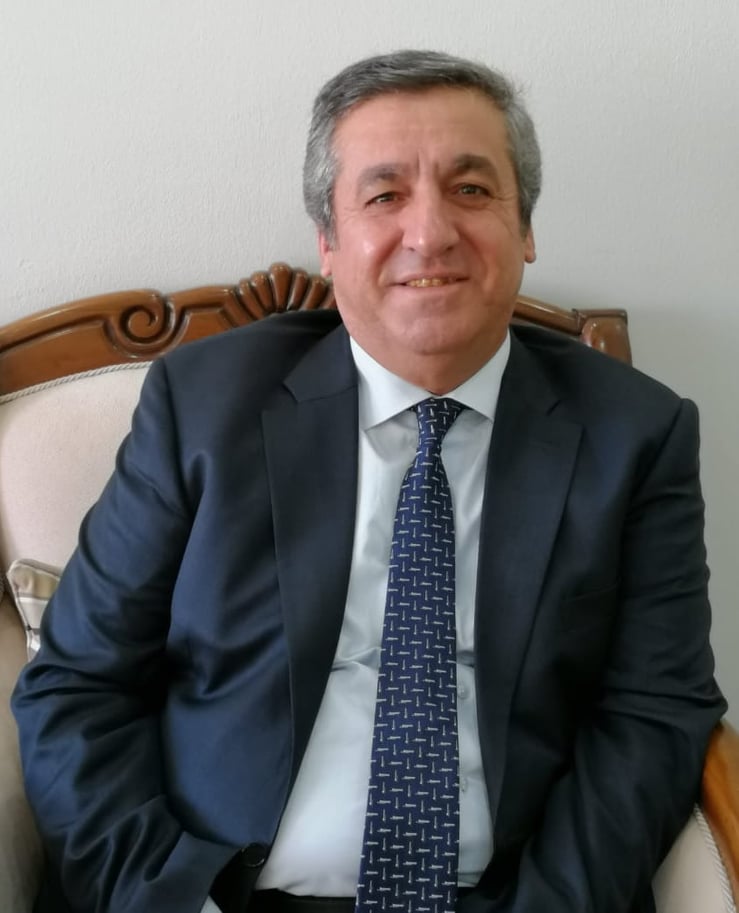
Yusuf Beğtaş
You can also send us an email to karyohliso@gmail.com


Leave a Comment