
In this article, I would like to remind us of some fundamental truths regarding life energy within the context of the relationship between the soul and the body.
In essence, a human being is a soul clothed in a body. They are a spiritual and moral being experiencing humanity in this world. For this reason, unless the criteria of a sincere spirituality and morality gain functionality in the inner world, a true experience of humanity cannot be lived and cannot be permanent.
The soul resembles a multi-faceted crystal whose material is love. The surface of this crystal is covered with the mud called "ego." Life is the process of cleaning this mud and polishing the surfaces—that is, the essence—of the soul. Unless this purification takes place, the high life energy based on love does not become active; the human being cannot attain true maturity.
Those who can discover their spiritual self are those who clean the mud of the ego and polish the essence. They find themselves not by "having," but by "being." Those who cannot discover their spiritual self, on the other hand, become imprisoned in the egotistical identity; even if they are adults, they remain internally undeveloped and seek their identity in what they possess or in the approval of others.
Because a human being does not consist merely of flesh and bones. The body is the visible face; the soul is the essence of being. Without the soul, the body is a lifeless shell, and without the body, the soul is a free perception.
Therefore, the relationship between the soul and the body resembles the relationship between the owner and the vehicle: the soul is the owner, the body is the vehicle. The soul uses the body; the body is an instrument that makes the soul's journey in this world possible. Just as a driver travels with their vehicle but the vehicle is not the driver themselves, the soul gains experience in this world through the body. The body is born, grows, ages, and dissolves; the soul, however, maintains its existence as the unchanging essence.
The needs of the body are limited; the needs of the soul are limitless. The body wants food, the soul wants truth. The body wants to rest, the soul seeks meaning.
For this reason, death is not an end, but a transition. Death is the soul leaving the body; it is not an annihilation, but a change of perception and space. The soul detaches from the bonds belonging to the worldly body but does not lose its existence. On the contrary, death is a gate of liberation for the soul.
The human being thinks of death as darkness; because they pass judgment by looking at the body. Yet, while the body dissolves, the soul turns toward its own realm. Death is not the closing of a curtain, but the parting of a curtain.
The soul resides in the body but is not condemned to it. The soul wandering in the realm of dreams while the body is motionless in the state of sleep is a small sign of this. Death, on the other hand, is the permanent state of this separation. When the soul loses the body, it does not perish; only its form of expression changes. Because the soul is not bound by time and space.
What makes a human being human is not the body, but the soul. The body is the stage of examination for the soul in this world.
Death is the closing of the stage; it is not the annihilation of the actor. Therefore, the real matter is not to decorate the body, but to mature the soul.
The body belongs to the earth and returns to the earth. The soul, on the other hand, is divine and returns to its source. The real matter is to live in the transient world without being smeared with mud, so that the body can return to the earth, and the soul to its origin, in a pure manner.
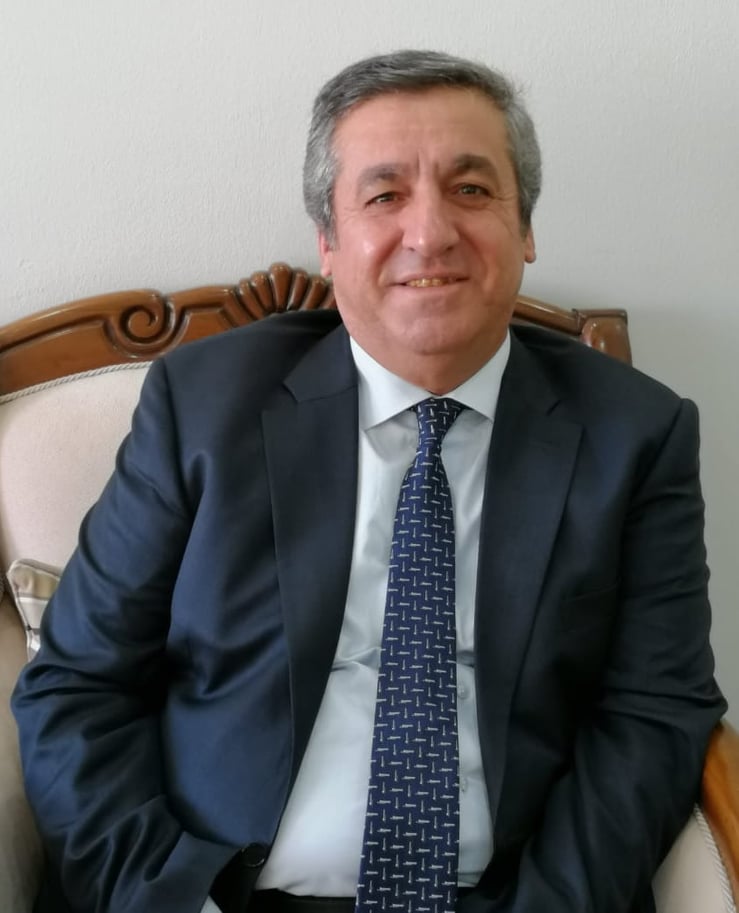
Yusuf Beğtaş
You can also send us an email to karyohliso@gmail.com


Leave a Comment