
"Blessed are those servants whom their master finds awake and labouring in his vineyard when he comes. Then their master will gird his belt and serve them himself, for they toiled with him from the early hours of the morning until the late hours of the evening. The Father will seat His labouring servants at table; the Son will serve them; and the Paraclete — that is, the Holy Spirit — will weave crowns of glory and set them upon their heads."[1]
Today, the Syriac people, scattered across the four corners of the world, face new trials of a different nature from those they have confronted throughout their history. Whereas in the past the threat was chiefly one of physical annihilation and forced migration, today the greatest danger lies in cultural erosion and the weakening of spiritual continuity. Social change, environmental factors, the declining use of the Syriac language in everyday life, the fading knowledge of church liturgy, and the difficulty of transmitting culture between generations are making it ever harder for new generations to connect with their own spiritual heritage.
It is not demographic presence alone that determines the future. What truly determines it is the capacity to hand down literary memory, language, symbols and meaning to future generations. For this reason, the greatest danger facing a cultural community is not oppression but forgetting. Forgetting is a silent devastation that stealthily hollows out the inside of identity. A community that loses its spiritual memory gradually becomes incapable of generating its own concepts, and loses the ability to interpret its own values and to think in its own language. In such a state, spirituality drifts away from the experience of conformity to Christ, and risks degenerating into mere repeated custom.
For this reason, the discovery and understanding of this spiritual heritage is not merely a human responsibility but also a cultural, educational and social necessity. Nor does this responsibility rest with the church alone; it belongs equally to the family, to educational institutions, to associations, to foundations, to researchers, and to everyone labouring in the field of cultural production. Families, in particular, by introducing their children to the church's prayers, hymns, liturgical language and Christ-centred teaching, must form the first and strongest link in this chain of transmission.
For what must be preserved is not merely a historical inheritance, but a universe of meaning that shapes the human person. Nor is Syriac liturgy, with its poetic language, symbolic expression and profound theological depth, simply a form of worship inherited from the past. It is a school that teaches a person how to pray, how to meditate along the path of meaning, and how to read life from the perspective of divine wisdom. When liturgical meanings are grasped and connected to daily life, worship ceases to be a ritual performed out of habit and is transformed into a life-changing experience that prepares a person for a living encounter with God.
Under today's conditions of consumption, it seems difficult for future generations to understand this rich heritage and to inherit it intact. A heritage that is not taught is forgotten; a heritage that is not lived becomes faint; a heritage whose meaning is unknown eventually loses its function. For this reason, the task of today's opinion leaders - those bearing responsibility in the church and in civil society - is to build a solid bridge between past and future: to carry the spiritual and cultural torch inherited from our forebears to the coming generations, not merely by preserving it, but by understanding it, living it, reinterpreting it in the language of the age, and passing it on with greater awareness.
In Syriac culture, the hymns chanted especially in church and during worship are not merely texts of literary value. They convey much through little, the little through essence, the essence through word, and the word through concrete, comprehensible images - carrying it all into the mind, the intention and the direction of the hearer. In this respect, the hymns are spiritual teachings that carry profound meaning concerning absolute ownership, and that aim to educate, transform and mature the believer in the consciousness of stewardship. The fundamental purpose of hymns composed in this didactic style is to bring the scattered mind and the pathological aspects of human nature face to face with the healing wisdom of the soul.
The aim is to keep strong and active the soul, which is the very reason for man's existence - to awaken him, beyond material attachments and worldly passions, to a deep awareness first of his own truth and then of his fellow human beings; to reflect this awakening into every sphere of life, transforming it into a life that produces goodness, virtue and the common good. In this way, faith ceases to be an ordinary habit built on rote repetition, and is transformed into a conscious, life-changing mode of existence.
Man is an indivisible whole composed of soul, body, mind, heart, conscience, reason and emotion. To neglect any one of these, or to sacrifice one for the sake of another, damages the integrity of the human person. Through these literary hymns, the Syriac spiritual tradition seeks to preserve this wholeness and to lead man towards the maturity of truth. For true faith must transform not only a person's mindset, but also his character and his inner programming - that is to say, his life.
For this reason, Syriac hymns aim to raise a person's mind, senses, and both the lower and upper layers of consciousness into the light of divine wisdom. The ultimate goal is to carry a person into a responsible and moral life in which love and empathy reign. In this way, man is invited to be purified of selfishness, of pride, of the desire for absolute ownership, and of divisive, alienating tendencies. Through this, a new horizon of meaning opens before the person who is broken, weary, and searching for a branch to hold on to - for faith united with virtue raises a person to the mature station of morality and conscience.
The rich liturgical tradition of the Syriac Church often carries out this spiritual education through parables. Following the example of Christ's own method of teaching, this tradition employs symbols of great philosophical and social depth, repeating them constantly through hymns in worship and in the sacraments. The purpose of this repetition is not merely to keep memory alive; through its effect, it keeps the inner world continually vigorous and directs it towards truth. For the symbols and associations within the hymns aim to carry the believer from side paths onto the main road of truth, and towards personal enlightenment through the light of divine love.
Yet a significant number of these hymns are, more often than not, recited out of habit, without their profound meanings being grasped. Repetition whose meaning is not understood, however, loses its soul over time. This state of affairs is both sorrowful and thought-provoking. It is precisely as a product of this sorrow and this questioning that the present study has come into being.
For everything we possess, including our very soul, has been given to us as a trust. Knowledge, wisdom, service, talents, rank, position, material power, and even life itself, are each a trust from God to us. We are under no obligation to abandon these trusts to the mercy of the self and its selfish passions. For the essence of being human lies not in possessing, but in doing justice to what has been entrusted. The true worth of a trust, moreover, is measured not by how much of it we hold, but by the extent to which we are able to transform what has been entrusted to us into goodness, justice and the common good.
Seen from this angle, a culture that does not think with its own concepts, does not understand its own symbols, and cannot interpret its own spiritual heritage can have no powerful word to offer either to future generations or to those around it.
The Truth Confessed at the Table Every Day
Taking as its starting point the two prayers recited by the spiritual shepherd (that is, the priest) before and after the meal, this study further emphasises the truth that absolute ownership belongs to God alone. For these prayers remind us of the same truth every single day: nothing we think of as ours is, in fact, our own. We are the true owners of nothing; everything has simply been given to us as a trust, for a temporary time - that is all.
Saint Paul addresses those who boast of the abilities and opportunities they possess, and are thereby puffed up with pride: "For who sees anything different in you? What do you have that you did not receive? And if you received it, why do you boast as though you had not received it?" (1 Corinthians 4: 7).
When we grasp this truth in mind and in spirit, our outlook on life will change at its very root. We shall then become a more conscientious father, a more compassionate mother, a more honest shopkeeper, a fairer teacher, a writer of a more powerful pen, a more humble priest, a more responsible monk, a wiser metropolitan, a more virtuous politician, a more ethical doctor, a more honest lawyer, a more conscientious software developer, a more self-sacrificing civil-society volunteer, and more responsible citizens.
On the other hand, those two prayers recited before and after meals in the Syriac Church are not a mere meal ritual or a conventional expression of thanks. These prayers are a profound confession of faith that sums up God, man and creation in a few sentences. As soon as one sits down at table, the first prayer -recited before the meal by the spiritual person[2] on behalf of everyone eating- allows a person to see himself not as the owner of the blessing but as the recipient of divine grace; the prayer of thanksgiving offered after the meal, in turn, recalls once again the true source of the blessing received. This reminder is, in itself, an act of awareness and responsibility.
The first prayer[3] opens with the words: "O my God, bless this table, which You have prepared for Your servants who bow down before You." This phrase is deeply significant, for the prayer regards the table not as a blessing prepared by man, but as a grace prepared by God for His servants. Man may work the soil, sow the seed, and put forth his labour; but it is God alone who gives the earth its yield, makes the seed sprout, sends down the rain, and sustains the whole of creation. The true owner of the table is therefore not man, but God. Whatever his position, when a person approaches these divine blessings bestowed upon him with a sincere consciousness of being a steward, he can more readily attain the inner fulfilment he longs for, and can also become more balanced and measured in the outer world.
The prayer goes on to entreat that the table be enriched with "nourishment, sustenance, blessing and abundance." For in Syriac tradition, blessing does not consist merely of the food set upon the table. The true blessing is the life-giving grace that God has placed within that food. Abundance does not mean sheer quantity; it is the manifestation of God's mercy and grace upon the blessing. This is why the prayer asks not merely for the daily morsel, but for God's inexhaustible mercy.
The prayer of thanksgiving recited after the meal[4], meanwhile, turns a person's attention away from the blessing itself and towards its owner - that is, towards its true source. Repetitions such as "Praise be to God for His goodness. Praise be to God who nourishes us. Praise be to God who satisfies us. Praise be to God who gives us life" are a deliberate stylistic device of Syriac liturgical language. Each repetition teaches the self this truth: "I do not live because I work and earn; I live because God gives me life."
The thanksgiving expressed here is directed not merely at the food, but at life itself. For while man may eat the bread, it is God's creative power that gives that bread its strength for the body, its life for the blood, and its vitality for the soul. For this reason, in Syriac theology thanks are given not for the bread alone, but for the divine power that keeps man alive. In this way the soul is kept warm, living and dynamic, while at the same time the order of mutual need existing within the universe is recalled. Those who have filled their inner emptiness and discovered their spiritual selves, as they contribute to this order of need with free will and joy, are in fact also developing and polishing the very talents entrusted to them.
These two prayers recited at table therefore set forth the two fundamental teachings of the faith: Absolute Ownership and the Consciousness of Stewardship. Absolute ownership belongs to God alone; He is the One who brings all creation into being, sustains it and keeps it standing. The consciousness of stewardship, for its part, expresses everything that God has bestowed upon us as human beings. For the earth and everything in it belong to Him. Man is not the owner of this divine estate, but a steward responsible for the blessings entrusted to him.
This is why, before the meal, the church prays not so much for the blessing itself as for the abundance of the blessing, and after the meal gives thanks not so much for the blessing itself as for its owner. In this way, the same truth is professed anew at every table: Life, bread, abundance and possession all belong to God. Man is a being who lives by His mercy, is nourished by His blessings, and is bound to give Him thanks. This faith transforms the table from a mere place where the stomach is filled into a sacred encounter in which divine generosity is experienced, gratitude is learned, and the consciousness of stewardship is renewed.
The Vineyard and the Vinedresser (Matthew 21:41)
The parable of the vineyard told by Christ is not a historical tale spoken two thousand years ago. It is a living truth that must be read and understood anew in every age. Like abiding in Christ, living in His love, and offering the fruits of this bond to life, it carries profound meanings that remind a person of his own limits and make him part of a greater whole. Every leader, every institution, every church, every organisation, every community and every spiritual leader who wishes to understand it must first see himself in the mirror of this parable. For Christ, by drawing examples from local culture, conveyed His divine message to the people in a simple language they could understand. Had He not done so, His message would have been far harder to grasp.
It is for this reason that I venture to interpret the "vineyard" metaphor, so frequently found in church liturgy, through the figures of the vineyard and the vinedresser. My aim is to recall the moral meanings of these symbols and what divine gifts, the consciousness of stewardship, and absolute ownership truly mean, and thereby to give voice to man's responsibility before them - regardless of rank or position.
For the vineyard parable does not consist of moral advice alone. It is a multi-layered teaching that speaks of man's living union with God, his being nourished by that union, and his manifesting that life through visible fruit. This teaching also holds a strong place in the Syriac church tradition. In the interpretation of the church fathers, the vineyard represents either life or the church, while the vinedresser represents God's ever-teaching, ever-transforming love. For this reason, the vineyard is regarded as a living symbol of spiritual maturation. Man, too, is regarded as a church; and in this way the meaning of the vineyard metaphor expands, deepens and is further enriched.
When we examine the vineyard parable found in the Gospel, which has since become the subject of hymns, we see that the duties we undertake in every sphere of life - the church first among them - are, in fact, each a form of vineyard labour. We are neither the vineyard itself, nor the owner of the vineyard. The owner of the vineyard is God; He is the vinedresser. We are merely the toiling labourers working in His vineyard.
If God is the owner of the vineyard, then the vinedresser is the one responsible for protecting it, cultivating it, and enabling it to bear fruit. The more the vineyard is valued and tended, the finer the fruit it will yield. Yet it is a highly dangerous and poisonous state of affairs when man, upon gaining authority and position, forgets that he is a steward and begins, in his own mind, to imagine himself the owner of the vineyard. For this is precisely where true corruption and decay begin. When the consciousness of stewardship is displaced by a sense of ownership, the poison of power and pride take hold, and man turns from serving to ruling, from protecting to possessing.
Although concepts such as the vineyard and the vinedresser are voiced daily in prayers and hymns, their meaning is, unfortunately, not internalised or reflected in life to the degree that it should be. In my view, at the root of many of the crises experienced today, both in the church and in society at large, lies precisely the fact that these teachings find no practical expression and are not lived out.
The wicked vinedressers spoken of by Christ were not men who destroyed the vineyard. They, too, believed they were protecting it. But they had forgotten the true owner of the vineyard, and, turning the trust into property, had begun to act with tyranny. This was their greatest sin.
To read this parable today merely as a stern warning addressed to the workings of the Old Testament would be a grave error. For Christ's word is a divine warning addressed to every age, to life itself, and to the church.
Today the same question stands before every one of us. Are we truly tending our vineyard with a consciousness of stewardship, or are we leaving it in the shadow of our traditions, our institutions, our positions, our personal calculations and our ambitions?
In its spiritual sense, the vineyard is life; it is the church. The vineyard is man; it is our young people, our children. It is our mother tongue, our people, our family, our brother. The vineyard is the heart that thirsts for the love of Christ. The vineyard is every sphere entrusted to us and in which we are bound to serve. It is the village and the city in which we live. It is our land and our homeland.
If the vineyard is not bearing fruit, it is not the vines that must be questioned, but those who labour within it.
The painful truth is that, when man focuses on repairing the walls of the vineyard, he sometimes fails to notice that the vines are withering. While striving to keep the institution alive, he neglects the person. While labouring to preserve the past, he fails to see the future. While defending identity, he neglects the soul…
What Christ wants and seeks is service and fruit alone - the fruit of morality, the fruit of love, the fruit of respect, esteem, compassion, conscience and solidarity. It is the fruit of goodness, of justice, of virtue, of understanding, of awareness, of unity and of humility…
If these fruits are absent, then however beautiful the vineyard's outward appearance may be, its owner, when He comes, will go away empty-handed — and He will consider taking the vineyard from us.
How easy it is to justify small compromises… Here, a seemingly trivial lapse of honesty; there, a small shortcut taken because "no one will notice"… Yet a person's attitude towards small things reveals - and shapes - his character in the face of great things. For honesty is not a virtue we put on only at important moments. It is a character built in the ordinary moments that no one sees, applauds, or holds to account. A person forms his true identity not through the face he presents before crowds, but through the attitudes he adopts and the choices he makes when he is alone. Christ explains this thus: "Whoever is faithful in a very little is also faithful in much, and whoever is dishonest in a very little is also dishonest in much" (Luke 16: 10).
Today, the greatest need is not new buildings alone, but new hearts beating with these sensibilities. Not more show, but more of a spirit of service. Not more argument, but more of a culture of listening. Not more boasting, but more self-criticism and repentance.
For the vineyard turns green again only through a culture of self-confrontation and an awareness of repentance.
Christ's words, "The vineyard will be taken from you and given to those who bear its fruit," are a powerful warning. God does not act according to title or lineage; He looks at the fruit. The real question that must therefore be asked is this: are we truly protecting the trusts we have inherited from our ancestors - the church, the language, the culture, the morality, the conscience and the humanity - with a sincere consciousness of stewardship, free from pride and self-satisfaction? Are we continually renewing and developing them so that they bear the fruit Christ desires, and are we able to hand them on to future generations?
For heritage is not merely preserved; it is kept alive. And heritage that is kept alive bears fruit in every generation. Those who lead the way in this shall, as expressed in the hymn Tubayhun l-Abde Ṭobe, be granted to wear the crown of glory of joy and peace.
For this reason, we must strive to be faithful labourers of the vineyard, so that the vineyard is not taken from our hands. Never forgetting the true owner of the vineyard, we must faithfully fulfil our responsibility within it. For nothing is ours; everything we possess has been entrusted to us. And a trust is transformed into blessing only when it is carried with trust, empathy, faithfulness and humility.
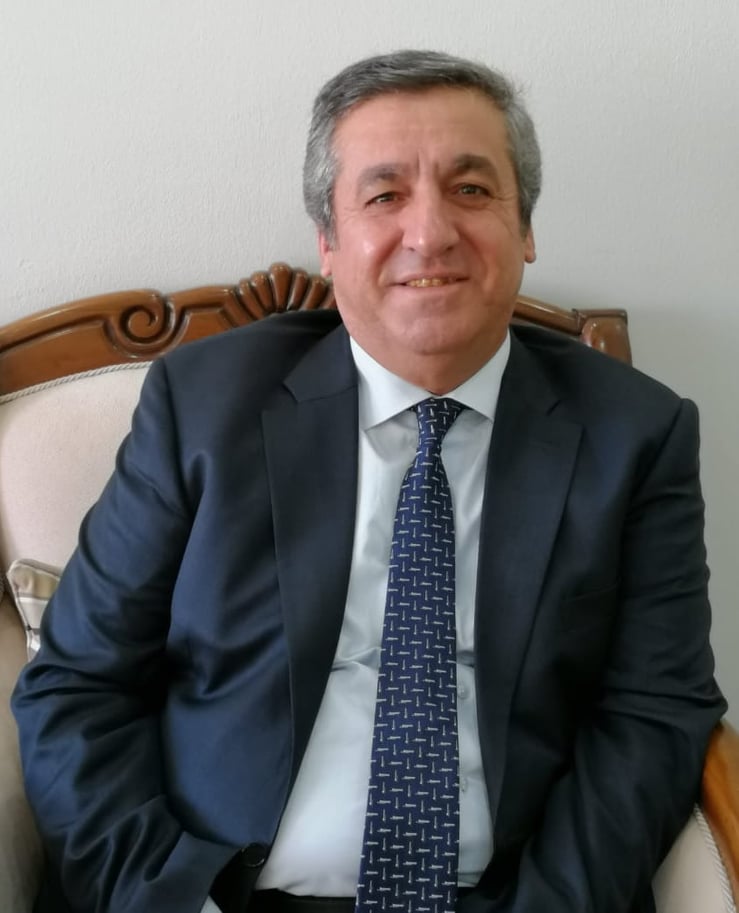
Yusuf Beğtaş
[1]This hymn, entitled Tubayhun l-Abde Ṭobe, is, on account of the profound meanings it carries, one of the masterpiece hymns most frequently chanted in church on various occasions. In both its material and spiritual dimensions, it is a concise expression of a philosophy of life carried down from the past to the present day. For the general benefit, I translated this hymn into Turkish and have included it here, as it serves as a foundational source for this study.
[2] The prayer before and after the meal is recited by the patriarch, the maphrian, the metropolitan, the priest, or the monk.
[3]Prayer Before the Meal: O my God, bless this table, which You have prepared for Your servants who bow down before You, with Your nourishment, Your sustenance, Your blessing and Your abundance. Enrich this table with Your inexhaustible blessings and Your unfailing abundance, for You show compassion and mercy to the whole of creation. In the name of the Father, the Son and the Holy Spirit, amen.
[4]Prayer After the Meal: Praise be to God for His goodness. Praise be to God for His blessings. Praise be to God who provides for us through His goodness. Praise be to God who nourishes us. Praise be to God who satisfies us. Praise be to God who gives us life. Praise be to the merciful God. May His mercy be with us - through the prayers of the Mother Mary and of all the saints - now, always, and unto ages of ages, amen.
You can also send us an email to karyohliso@gmail.com


Leave a Comment