
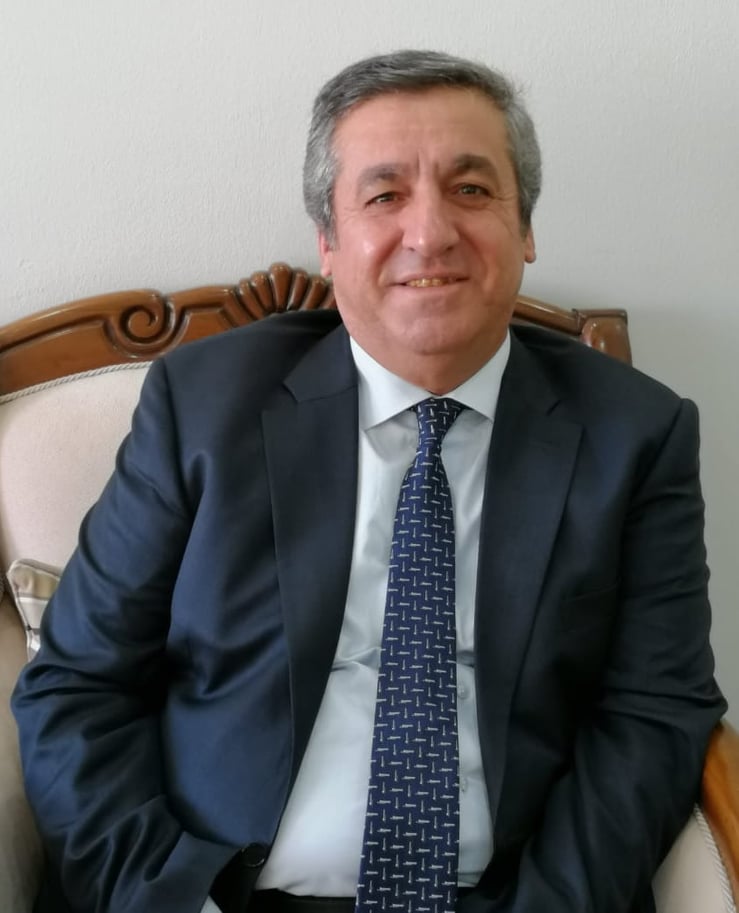
Everyone's Story is Different [1]
The life story of every human being is different; this difference is observed in their outlook on life, the fruits of their service, their labour, their humility, and their sincerity. For this reason, a person who serves in the social sphere, holding the position of a social actor or an opinion leader, must always hear the voice of their own conscience in the context of self-discipline, and must realize their responsibility towards that voice. Because conscience is the most just and the truest arbiter within the human being. A person in this position should determine their administrative approach by managing their thoughts and aligning their discourse and action with their intention. Assigning blame to others or to circumstances means drifting away not only from responsibility, but also from self-awareness and inner strength.
If a person who possesses a position sets out with the understanding of the Good Shepherd (John 10: 11-16) with the intention to contribute and to complete what is lacking, within a social reality where negative prejudices are intense, they must also reckon with carrying a facilitating spirit. Because this spirit demands an attitude that does not pile up obstacles but reduces difficulty. The arduousness of the way, misconceptions, or the fractures brought by time must not overshadow this essence. The real matter, despite all adversities, is to be able to prioritize that which is constructive; to hold fast to enduring meanings, constructive attitudes, and values that nourish the soul. As wisdom says: "The path of truth widens with the footprints of those who facilitate."
Therefore, the person who serves the intangible heritage must be able to be themselves and remain themselves. They should adopt it as their motto to be a lightener of burdens rather than an aggravator, to expand meaning, and to increase morality and virtue. Because facilitating is not merely a method; it is a state of wisdom. It is being able to transcend inner darkness and leave a light upon another's path.
The moment a human being discovers their self-love, self-respect, and self-worth, they begin to write their own authentic story. Because when this realization begins, the path of self-governance and self-transcendence is opened. This path is the way to transcend distorted and disordered impulses—such as negative judgements, hatred, jealousy, ambition, desire, anger, exclusion, domination, comparison, and selfishness—and other inner obstacles. I discovered this path at a very early age. And as I advanced along this path, I understood that, in truth, certain losses and relinquishments are experienced so that the human being may find their true self.
On the journey to find the true self, everyone writes their own story and lives that story. Nevertheless, every story always possesses three dimensions: the owner of the story, society, and truth itself. Yet life, just like a coin, has two sides: the visible and the invisible side. Even if society, in general, senses the servant character, those who do not know the intellectual background that triggers the work done—especially those who cannot silence their inner noise—are caught only by the glitter of the visible face; they judge and comment accordingly. Yet, the real pulse of life beats on the invisible side. For the true story is shaped not in the image of the outer world, but in the light of the inner world. Truth manifests in the human being's world of thought, their inner echo, their feelings, their understanding of responsibility, and their moral and conscientious structure. The clearer the inner light is, the deeper the meaning behind the visible becomes; and attitudes and behaviours become that much more constructive. For if there is no morality within the intention and action, if it does not lean upon conscience, both sides of the coin will inevitably appear blurred.
Therefore, a human being or society can make sense of truth only to the extent that they listen to the voice of good intention and correctly comprehend the visible practices. For every reading performed with relative interpretations, if it lacks conscience and a moral foundation, or if the gaze itself is blurred, cannot feel truth as it is. Hence, it finds it difficult to understand events/phenomena, and in fact, most of the time cannot infuse them with meaning at all. Particularly if a person is under the influence of selfish passions, whatever they carry in their inner world, they weigh the reality of the person before them with it; they see it that way, they interpret it that way. If they do not notice that person's inner light, social equipment, and mental clarity, thoughts inevitably fall into the hands of illusions. This leads to erroneous interpretations, faulty associations, and the distortion of reality.
The effort to develop the intangible cultural heritage, which is as meaningful as keeping an ancient voice alive, requires sincerity and a deep awareness. Because bringing the ancient into alignment with the new does not merely expand the heritage; it deepens the roots of the soul and keeps memory vibrant. Nevertheless, this effort of development is not an easy path. This path is akin to carrying the heat of fire. For ancient heritage travels not with comfort, but with dedication and identification. The person who enters this path is tested not only by producing, but also by transcending the weight of their ego, and by responding to negative criticisms not reactively, but with a mature influence. Because keeping the heritage alive requires understanding and labour; yet that which is born of this understanding and labour is not fatigue, but an inner richness that grants maturity to the soul, patience to the heart, truthfulness to the tongue, and fortitude to the steps. With this richness, when a human being nourishes their labour with spiritual intelligence and consciousness, truth is understood more clearly and more comfortably both within themselves and in society. According to the law of truth, the mask of everything false and artificial will surely fall; the true story, on the other hand, becomes visible like a stone rising slowly from the bottom of the water. As the invisible side is understood, both the essence and the equipment of the human being emerge with clarity. Sooner or later, sincere effort pierces through the veils of selfish attitudes covering the true story, seeps out, and becomes understood. For the inner realm of the human being determines the colour and shape of their outer realm. That place is the soil of values, beliefs, servant impulses, and prices paid in silence. Burdens carried with patience and sacrifices made in secret form the veins of that soil.
My story resembles a journey moving with ebbs and flows within the veins of that invisible soil. Even though from the outside it appears as if it is caught in the flow of events, in reality, a gentle, invisible hand has always determined the direction or the course of my life. Therefore, these words of Einstein mean a great deal to me: "The motivating force behind all doing must be the desire for love and justice."
My story is one that flourishes on the invisible side and overflows into the visible, shaped by sincere effort and compassionate awareness. The teaching, understanding, philosophy, service, justifications, arguments, choices, reflexes, behaviours, and attitudes that constitute it resemble no other story; nor do they have to. In every step I took, in every field where I cast a net, I bound myself to the spirit of identification and sincerity. The "Christ Conscious" that nourishes and guides my world of thought blesses consistent discourse and action. In this consciousness, knowing alone is not sufficient; knowledge gains meaning when it transforms into action. If goodness remains only in thought, the soul is overshadowed. Evil is sometimes born from inaction; goodness, however, finds meaning through the movement of a compassionate awareness coming from the heart. As it is written: "So whoever knows the right thing to do and fails to do it, for him it is sin" (James 4: 17)܇
But I have learned from administrative practices that one must be careful not to harm anyone, even inadvertently: compassion that does not consider the selfish passions of the opposing party can create a heaviness in the soul. Compassion that exceeds boundaries causes harm; sacrifice whose dose is exceeded can fatigue. Good intention can disrupt peace if it serves bad impulses or exploitation. For a kindness done when the opposing party has not requested it may not—always—be perceived as kindness. Because the sole purpose of kindness is simply kindness. Therefore, the way to contribute to the flow in a balanced manner passes through a high awareness capable of analysing phenomena. In the eyes of a person (or people) who cannot silence their inner noise, kindness that respects self-dignity is far more precious. If boundaries are preserved, self-worth gains much more repute. It is then that kindness finds its meaning; it both grants peace and exalts the soul. Nevertheless, in our geography, the spirit of humility and dedication capable of seeing another as oneself—most likely because human dignity and labour are not shown sufficient respect—is easily open to being misunderstood. And services offered with this spirit, more often than not, do not find the value they deserve. Having personally experienced this reality, Saint Mor Ephrem (306–373) dropped this striking note from the age he lived in to the present day: “ܐܶܢ ܐܶܬܡܰܟܟܬ ܚܰܫܒܽܘܼܟ ܕܠܳܐ ܚܰܘܪܳܐ” "If you act with humility, they deem you uncouth."
Information obtained as a result of research conducted with the logic that "the bee that does not leave its hive cannot produce honey" is grasped and embraced sometimes with the heart, sometimes with love, and sometimes with grace. When that is the case, it surely teaches something to the human being[2]. As a result of my research, I realized that, although the light of Syriac culture—which has added different meanings to the history of thought—has grown dark and blurred, it is like the contemporary voice of a contemplation embracing centuries. It is a sorrowful VOICE addressing the wounded comprehension of our day. A VOICE that resists alienation from itself and advises looking into the mirror of the self...
While this sorrowful voice coming from historical layers blows bitter northern winds in my heart, its unique sincerity leaves silky smiles upon my face. My embarking upon researching the truth prioritized by this voice at an early and adolescent age caused me to hear that voice much more. As I came to know that voice, I dug into myself. As I dug into myself, I found my identity. As I found my identity, I deepened much more. As I deepened, I began to search for greatness and station not on the outside, but on the inside. In this process of transformation, I began to care about value judgements that direct towards morality and virtue. Accepting my own deficiency as a gain, I embraced them with a grace coming from the heart. As I embraced them, I learned to look into the mirror of my self. As I learned, I felt that I was differing in heart, in soul, and in mind. This feeling directed me to an inner journey. And this, adding new awarenesses to me, changed the style and flow of my life. When I directed my awareness towards moral values with the understanding of the Good Shepherd (John 10: 11-16) and with His positive psychology, I tried to understand human states with empathetic feelings rather than judging. With the approaches of eclectic philosophy, I focused on the rose rather than the thorn[3]. I valued the rose within the awareness of the thorn. By seeing Christ in the human being, I took care not to become like everyone else [4], yet I valued everyone as well. Since I adopted it as a fundamental principle to understand the states of humanity and, with this sentiment, to offer contributions to those who requested contributions from me, I was never inside any factionalism. While performing my duty, I turned the approach of 'compassionate clarity' into a behaviour by blending it with a culture of respect. In my social relationships, I took care to be open and honest, and to use a language that does not wound. I endeavoured to understand the established mentality, but I did not fall under its influence. I did not say "me first." I never said "only me." I accepted another as myself too. But I felt the burden, the pain, and the difficulty of this acceptance to my very marrow [5].
But I know that all those tensions and experiences deepened and strengthened the boundaries of my self as much as a book. I felt the excitement of generously transmitting the meanings I perceived and learned to everyone I was with—great or small, near or far, sharing the same environment, breathing the same air, creating a synergy without making any distinction—so that authenticity might flourish and human benefit might increase. I preferred to stand at a reasonable and equal distance from civil formations and political views. Acting respectfully towards the world of value and meaning, I stood both behind and ahead of existing tendencies. I acted so. Thanks to this approach, I was valued, and I gained trust and sympathy. I served with the consciousness of this awareness and clarity of vision. For to notice is one thing, to act with the consciousness of noticing is another. I also performed my administrative duties without escaping into facilitation or nonchalance, with the complementary logic of shumloyo, with the impulse of 'blessed is he who begins and completes' (tub layno d-shari u shalem). For this impulse does not get caught up in the noise of the crowds; it does not content itself with saving the day. It is concerned with constructing the future with the will to see the invisible. It knows well that the person who expands their soul also widens their horizon. Thus, wisdom and meaning accompany them. Their labour, too, rests upon truth and equity.
During the narrow and difficult processes of administration, I worked very hard, I strove greatly to remain myself without escaping into selfishness or feigning superiority. But because of the spirit of identification that guided this striving of mine, I paid prices, and experienced difficulties and pains[6]. When I did work by loving my culture without escaping into pragmatism and imposition, when I acted as a facilitator, when I lightened burdens, instead of the warmth of conscience, I was subjected to the wrath of forced expectations and unfortunate delusions that fatigued my soul. I had to breast the negative prejudice and association fallacy springing from a conditioned consciousness. Even though all those pains I endured for the sake of a dying culture during difficult times were inherited by me from my family, I wish to state that I have well analysed the mental background and fundamental motives triggering them in a turbulent geography.
I never climbed anywhere using the shoulders of others. I learned at a young age that such a place does not belong to a human being. If a person has not reached a place through their own labour, neither is the place they reached truly theirs, nor is there any meaning in remaining there. Believing in the saying "destructive criticism consumes, constructive appreciation produces," and realizing beforehand that the flower left upon graves does not understand the language of the grave, I adopted a service-oriented approach that places the human being at the centre. I cared about valuing the human being, adding value to value, and appreciating labour. As in the saying that the greatest success in life is for a person to cope with themselves, I fought with no one. However, my struggle with myself always continued. Ultimately, that inner struggle evolved from contradictions and opposites into a complementary understanding. During the dense processes of darkness, I made the Christian understanding a light upon my path.
As can be seen, I became acquainted with the light and wisdom of Syriac culture at yet a young age. With that light and that wisdom, I dived into literary depths. Within the social reality in which I was raised, this diving both fatigued me and made me think deeply. In time, this diving transformed into an embrace. Despite the pressure of negative prejudices, I never strayed from the path of that light and wisdom; I never gave up on the virtue of that embrace. Despite narrow and shallow understandings, and association fallacies, I always carried the conscientious responsibility of expanding that light and wisdom within my soul; I endeavoured to fulfill its requirements even at the cost of enduring difficulties. For—I understood from that light and that wisdom—a person's life gains meaning not by what they possess, but by the value they add to society, the lives they touch, and the benefit they leave behind. I learned this reality at a young age and made it a guide for my life. With this consciousness, in my ongoing long-drawn-out march, I took steps sometimes with a broken wing, sometimes with limited means, but always with a cautious will. I believe that the labour I have exerted despite all difficulties belongs not to a single person alone, but is part of a common heritage carried to this day from the longings of a long-suffering people. For a sincere stance continuing with an effort beyond effort reaches beyond time and finds its true meaning there.
I set out being inspired by Christ’s understanding of the "Good Shepherd" (John 10:11-16). I saw serving with His complementary impulses not as a duty, but as a natural stance. Therefore, my story developed within self-love, self-worth, and self-respect. While setting out, I determined my direction not according to the wind of the outside, but according to the powerful voice within me. Instead of variables I could not control, I developed focusing on elements I could discipline. My story began in a very turbulent period. In a process woven with prejudices, tensions, difficulties, and exclusions, it was kneaded with feelings of identification and sacrifice. This process was never easy in a turbulent geography. Being concerned with the intangible dimension of Syriac culture, whose love I carry in my heart, for whose sake I made sacrifices and paid prices, and being anxious about its course is a flourishing of the seeds cast into my soul during childhood years. It is an exertion of the responsibility loaded upon me. It is the striving of this exertion not to quench the spirit (1 Thessalonians 5: 19). It is an effort to utilize the information of neglected realities.
Therefore, no one gave me anything I did not deserve or did not possess. For a human being exists through their inner equipment, their consciousness of responsibility, and the positive contributions they add to the field they serve. I chose to walk in the light of this reality. With my own steps, with my own effort, I tried to exist and indeed to be a companion, as if digging a rock with a needle. On this path, I advanced with utmost sensitivity. In the face of difficulties, I blended the struggle to exist with the consciousness of being a companion. I fulfilled my multiple duties with this understanding. I flourished in the soil of my labour, and grew with the sun of my patience. And thus, I constructed my own literary stance; through a process of construction resting upon soul roots. Respecting the awareness of the burden I carry. With an honourable and humble heart; without bending, without sycophancy, without changing direction according to the wind.
I never broke away from the orbit of my story. I wrapped and embraced it tightly, and was wrapped in return. Therefore, my story is full of the labour and altruism of selflessness. Stories whose prices have been paid leave a trace and carry value. As the French thinker Louis-Ferdinand Céline (1894-1961) said: "The only story that carries value is the story whose price you have paid."
For I was born in the lap of my culture, which is abundant in sorrow and hardship, its joys lost, its expectations stolen. The environment in which I was raised was surrounded by people who pondered upon the states and situations of my culture, acted responsibly, and endured torments. The first spiritual climate that kneaded my soul, my mind, my world of heart, my feelings, and my sensitivities in order to be on the way and to remain on the way, on the journey of knowing, doing, and becoming, is my family. Next comes the complementary education I received at Midyat and the Monastery of Mor Gabriel, and the period of instructorship and administration in this monastery extending over decades.
The cross I carried for 30 years in church administration is my greatest teacher. However, to continue in such a difficult and gratifying field while remaining on a humane orbit, it is not enough merely to have experienced certain pains; it is also necessary to have rowed or swam quite a bit in that boundless ocean of Syriac literature. Without applying to ancient and contemporary writers, developing a new literary stance could have been misleading. For this reason, in a process surrounded by extraordinary conditions, I walked with morality and perseverance like a pen that reminds of the literary. Because I knew: every lost word loses a part of the soul; every forgotten value deducts something from the meaning of the past. In the midst of that deduction—among prejudices, false associations, and blurred perceptions—I stubbornly chose to exist and to remind. I persevered. For to persevere is for a tree to learn to resist in its roots despite the blowing of the wind. It is the will to remain upright even at the cost of being mistaken.
Every age carries invisible upheavals and struggles. And it gives birth to personalities seen with the heart. With this sentiment, I have been contributing to the difficult march of Syriac culture in the homeland—for thirty-five years. Relying not upon the strength of others, but upon my own labour. Because I deeply feel the specific weight that this ancient culture carries in the region; I respect this weight in my every step.
When there was not even a shred of hope, when everyone turned their back on Turabdin and hit the roads of migration, the cultural heritage was being forgotten, the word was being buried in silence, and memory was being covered with fog. While our people were being massacred, the echo of ancient hymns was withdrawing from narrowing courtyards, and even the prayers that had permeated stone walls were left orphaned. Still, memory was still breathing in the depths of the soil. The roots carried the patience of the day they would flourish anew.
This journey I set out upon years ago, I initiated with a search for wisdom dedicated to the lands where I was born, to my language, and to human dignity. I add to my writings not only words, but my patience, my sorrow, and my hope as well. This journey transformed into a literary duty extending from its roots in the past to the present day. I endeavour to interpret the intellectual and ethical heritage of Syriac culture together with the needs of a changing world; while shedding light upon the wounds of today, I also express the needs of tomorrow. My works are directed towards preserving our cultural identity and keeping our spiritual heritage alive. It aims to be a voice for meanings, values, and narratives that have been silenced or forgotten; with this effort of mine, I believe I contribute to the Syriac people confronting their own identity consciousness and to a mirror being held to their inner truth.
In the instructorship I performed at the Monastery of Mor Gabriel, I did not merely teach Syriac. I exerted intense labour to instill the layers of our identity, our soul roots, and our values into students with love and discipline. As a result of this effort, with the responsibility of having gained successful individuals for the church and society, I continue to nourish the same field; watering it with devotion and consciousness. I do this by prioritizing moral consistency within the awareness of calculating attitudes. In every contribution I make, in every human touch, in every line I write, in every word, I was feeling that I was multiplying a bit more, strengthening a bit more, approaching myself a bit more. And for this reason, sometimes I was so at peace that it is as if my life story is beginning now, anew.
On this journey that begins anew every day, my most fundamental milestone has been Christ. I endeavoured to shape my administrative and social understanding according to His guidance. Because to me, goodness flourishes with truthfulness; truthfulness, on the other hand, breathes with sincerity and virtue; and sincerity and virtue find completeness in Christ. This vision is an understanding that places morality and conscience at the centre.
I encountered highly attractive material offers to abandon my vision. Despite all fractures, I did not give up. Because the love of culture I carried inside was not merely an identity; it was a trust from God, a reminder. The way was paved with the stones of prejudice. But I placed those stones under my steps and continued on my way. I did this with the logic of the "Good Shepherd" (John 10:11-16) inherited from my father, by endeavouring to understand established perceptions; with knowledge and love. For the life of my late father Abuna Tuma, who performed his spiritual duty by prioritizing the logic of the good shepherd, and that of my grandfather Yusuf, are full of events that serve as an object lesson regarding claiming our spiritual heritage. Both paid heavy prices for this cause. The adversities they experienced for the sake of our spiritual heritage amidst the difficulties and privations of the period are thought-provoking. Their claiming of this heritage at the risk of their lives, passing as it were through the valleys of death, directed me to certain questionings. As a result of those questionings, while executing the mission I undertook for my authentic culture and its ancient wisdom found in the depth of meaning of our geography, I felt that I was left alone by being subjected to the misunderstandings of shallow and narrow approaches; but I was not alone. Every good intention, every Syriac letter, every hymn, the silent prayers of people at home and abroad who felt the spirit of my service became my companions. This stance was neither the product of an anger nor the voice of an opposition; on the contrary, it was the cry of conscientious responsibility and belonging. At every step, I carried the breath of the past and the hope of the future.
I know that the deepest struggles are the most invisible ones. And certain successes, in undeveloped lands, in minds open to the exploitation of labour, are more often than not ignored. But that ignoring is not a relinquishment; it is a heartfelt witness. This witness is written where the divine and the cultural meet.
When I look back today, no matter how thorny it may have been, I have not doubted the honour of this long path. My conscience is very clear. For my long-drawn-out service has served not only Syriac culture, but also the human soul's search for truth.
And I am still there. And I am still serving in that field. For perseverance and continuity are not an action; they are a mode of existence. And that mode of existence has transformed into a life story in me. Every word can transform into a thought, every speech into a sentence, every action into a paragraph. However, every story written with the pen of experience and labour must be shaped by independent will and conscious choices. The criticism of the path walked, on the other hand, should be made not with the knowledge of grammar, but with the knowledge of the heart. In this context, when I look at my own authentic story, I see that some chapters are incomplete, some lines are broken, some pages are tired. But it is precisely with this awareness that the true transformation begins. For in that transformation, I experienced new awarenesses. For life is not magic; it is a journey to be walked with consciousness and wisdom. Transformation, on the other hand, does not come from the outside; it begins from within.
Though I was strained, I preferred to be the architect of my own life by taking into account the beneficial word of my elders. Now I know that everything that happens in my life is, in a way, the echo of my thoughts, my words, and my service that is understood (or not understood). And whatever the title of this story may be, the responsibility belongs to me. This responsibility is simultaneously my greatest strength. Because responsibility is a sacred feeling that flourishes in the conscience of the human being along with becoming informed. Every piece of knowledge brings a obligation along with it. As a human being learns, as they notice; they begin to think not only for themselves, but for the whole/general as well. Therefore, responsibility is the most concrete indicator of the maturation of consciousness.
On the spiritual journey, a person's developing themselves, reflecting what they have learned onto their life, and contributing to their environment with this awareness of theirs is the first step of conscientious awakening. Within the divine order, the opportunity to repair and raise oneself is offered to every human being repeatedly. As a human being evaluates these opportunities and draws lessons from experiences, their comprehension deepens; they experience an inner awakening. The most distinct fruit of this awakening, on the other hand, is development. For a human being must first develop themselves; subsequently, they should attempt to contribute to social perception. As the sense of responsibility deepens, the consciousness of duty is born in the human being. Duty is the state of comprehended knowledge transformed into action with love and compassion. For this reason, responsibility is the foundation stone of spiritual evolution, the matured state of conscience. Conscience is a divine power existing in the essence of the soul. It is an inner light that separates right from wrong. For this reason, if a human being is not executing their duty, if they are practicing exploitation and injustice in one area of their life, they can neither preserve their rightness nor their inner peace in any other area. Because life is an indivisible whole. Without a sense of fairness woven with morality, justice, compassion, and conscience; without a consciousness kneaded with honesty and sincerity, personal integrity is never possible. For knowledge devoid of justice and compassion serves selfishness and cunning rather than benefit.
I continue the journey of updating and keeping alive meanings that have been lost, stolen, or not yet born. So to speak, I am working in the field of the future and endeavouring to sow the necessary seeds there. On this path, I try to reach wider masses by sharing my articles in Syriac, Turkish, Arabic, and English via www.karyohliso.com. Every article of mine published in the local press is followed and received with appreciation by a large readership from different ethnic structures. I think that every Syriac who possesses a conscience knows well what this means and how vital it is for the future of our existence in the homeland territories that carry our cultural heritage in their bosom. For it is known by experience what deviations and what damages that terrifying spiritual ignorance, referred to as "darkness" in the past, caused.
In order to transform prejudices in the social sphere, I adopt the motto "bridges instead of walls"; I view touching a heart without discriminating between people, making an intellectual contribution to a life, and leaving hope in a soul as the most permanent heritage. If we set aside the productive contributions I have made to the ignored Syriac literature and the derivations I have gained for Syriac, my essential purpose is to contribute to the social moral and cultural accumulation, and to be a bridge in transmitting our cultural values to new generations. For this purpose, with a unifying and integrating publication policy, I maintain an ancient operation by considering social sensitivities; I serve like a school of modern times, yet one that reminiscent of a madrasah. This service, from a scholarly and cultural perspective, provides meaningful contributions to the development and future of many people, from local academics to church clerics, from youth to different social segments. Providing this contribution is not easy without the equipment of knowledge and love. These contributions, continuing from the past to the present day, should be viewed as a school of thought, a literary circle, a hearth of ideas and culture.
For that which is permanent is the seeds of good intention left sincerely into the soil of life. Even if the human being forgets, truth does not forget; because kindness does not vanish. It is the sole heritage unaffected by the fragility of time. And the life story of every person carrying this honour is unique and matchless.
On this journey of mine, which is still continuing, I present my respects along with my deepest gratitude to everyone who understands me and does not withhold their spiritual solidarity.
Yusuf Beğtaş
[1] I dedicate this article, which explains my philosophy of life and administrative vision, to my beloved wife and to our beloved children Evgin, Yeshu, Zelga, Talita, and Birula, who grew up in the garden of our love.
[2] I experienced inoculation regarding Syriac culture from two fundamental sources: the first is the love of my late father, and the second is the philosophical depth of pioneering Syriac writers. While the first source prepared the ground for the second, the second reinforced my productivity.
[3] Regarding the metaphor of the rose and the thorn, this saying is very meaningful: "The rose failed to comprehend that the thorn was protecting it. The thorn, too, could not know that thanks to the rose, it was held in high esteem."
[4] Not becoming like everyone else is the way of being, of being able to be, oneself rather than being like everyone. This is the way where everyone possesses the key to their own existence themselves. At the same time, it is the path of inner enlightenment and it is a path that must be walked even if it is rugged.
[5]A jewel is merely a piece of stone to an ordinary eye; yet it is priceless in the sight of a goldsmith. Therefore, the understanding of responsibility that serves with awareness finds its true value only in consciousnesses that comprehend it. Minds left devoid of the knowledge of the big picture, the guidance of conscience, and the light of justice take refuge very quickly in the shadow of negative prejudices. When this happens, perception gets ahead of truths and events; delusions are believed, not what is visible. For this reason, the evaluations put forward transform into negative interpretations nourished not by the clarity of reality, but by the attitudes of darkness. Yet, interpretation and evaluation nourished by the wisdom of the soul provide a positive contribution to life; they produce goodness. They pull the person and society upward, exalting them. In contrast, evaluation nourished by the selfish passions of the ego leaves a negative effect on life; it produces harm. It pulls the person and society downward, fatiguing and debasing them. Because there is a fine line between looking and seeing. This line is highly decisive in reading phenomena. Nevertheless, some who are devoid of depth of heart (meaning) and social maturity, ignoring the effect of the heart, suppose that this fine line consists solely of the intellect. For this reason, everyone interprets according to the narrowness or width of their own inner world; they make sense of events with the criteria of that inner world. The altruistic and virtuous person who cares about human dignity and labour, and possesses constructive impulses, sees everyone like themselves, reads everyone with good intention, looks clean, thinks clean, acts clean. Nevertheless, in selfish attitudes that do not care about human dignity and labour, acting with distorted impulses and thoughts, prejudices and delusions speak: the arrogant supposes everyone is arrogant; the egotistical, everyone is egotistical. Someone devoid of virtue sees everyone as virtueless. A liar supposes everyone is a liar. A thief thinks everyone is watching for an opportunity. A dishonourable person knows everyone to be spineless like themselves. An impudent person deems everyone boundless. Whatever their own preoccupation is, they suppose everyone is preoccupied with it. Whatever the criterion of comparison is, they weigh everyone with that measure. For a human being, more often than not, sees the person before them not as they are, but through the reflection of the mirror within themselves. Therefore, the saying "The person judges others by themselves" is very meaningful here. In psychology, this is called projection.
Beauty is not a quality found solely on the outside, in people; it is related to the inner world, the spiritual clarity, and the level of perception of the person seeing it. Inner purity renders the beauty and virtues in another person clearer. If a person's inner world is dirty and noisy, the beauty in another person—morality, goodness, compassion, and virtues—becomes virtually invisible. This situation is due to the looking eye; that is, the heart and mind being closed to beauty. The word of Christ expresses this reality in a profound manner: "The eye is the lamp of the body. So, if your eye is healthy, your whole body will be full of light, but if your eye is bad, your whole body will be full of darkness." (Matthew 6: 22–23). This shows that the eye is a centre that illuminates or darkens the entire inner realm of the human being, not merely the outer world. For beauty is not in the gaze; it is in the quality of the beholder.
[6] I paid prices, and experienced difficulties and pains due to the spirit of identification that guided this striving of mine.
You can also send us an email to karyohliso@gmail.com


Leave a Comment