
Prayer is not merely an action in the journey of human existence; it is an invisible rhythm beating at the very heart of existence. In ancient Syriac spirituality, prayer is viewed as the breath of the soul; for just as breathing keeps the body alive, prayer keeps the soul alive. Therefore, prayer does not consist solely of words spoken in the presence of God; it is, at the same time, a sincere closeness directed towards His heart. Prayer is the moment when a human being transcends their own limitations and meets divine infinity.
The following words of Saint John Chrysostom (347–407) clarify this truth: "Prayer is the root, the source, and the mother of a thousand blessings."
This expression shows that prayer is not just an individual need, but a source of rooting and nourishment that guides the whole of human existence.
In this context, prayer in Syriac spirituality is the internal echo of the heart. Rather than words, it is the silent cry of the heart and the deep respiration of the soul. In this aspect, the Church Fathers define prayer as an "invisible dialogue".
At this precise point, Saint Mor Ephrem (306–373) voices this divine reality: "Prayer rising from a pure heart reaches God."
Centuries later, Mor Isaac of Nineveh (7th century) reinforces the same truth with these words: "Prayer is born not from the lips, but from the heart. Prayer is the gateway opening to the ocean of compassion."
This approach reveals that in Syriac spirituality, the essence of God is understood as compassion. Consequently, prayer is a person leaving their fractures and wounds into this divine ocean of compassion. Prayer is not a demand; it is the poetry of trust, refuge, and sincerity. For this reason, the relationship between prayer and God in Syriac spirituality is not a "transaction", but a relationship of "trust and custody". When words end, even silence becomes prayer.
The following words of Saint Augustine (354–430) complete this understanding: "He who prays well, lives well; he who lives well, dies well; for him who dies well, all is well."
This teaching aligns with the Syriac Fathers' call to "live life as a prayer". Because prayer is not an act of worship squeezed only into specific times; it is the maintaining of an entire life in the presence of God.
Viewed this way, prayer transforms the human being into an instrument joining the melody of the divine order. With it, life turns into a pleasant melody, and death becomes a gateway opening to eternity.
For prayer is not limited to words alone; it is a mystery that grows in silence, echoes in tears, and takes wing with an internal peace. The following expression of Saint Mor Basil (329–379) reflects this depth: "When you pray, the angels are with you."
Thus, the person who prays does not perform a merely individual act; they enter into harmony with the celestial community.
All these teachings show us that prayer is not just a supplication, but a way of being. Through prayer, a person recognises themselves in the presence of God, discovers the depths of their own self, and opens their wounds to healing through this discovery.
In conclusion, prayer is not a necessity or an obligation; it is a respiration, an internal echo, and a divine touch. For in the human turning towards the Creator, prayer is both the bridge and the journey itself. And as one prays, one finds oneself anew in the silent echo of God's love.
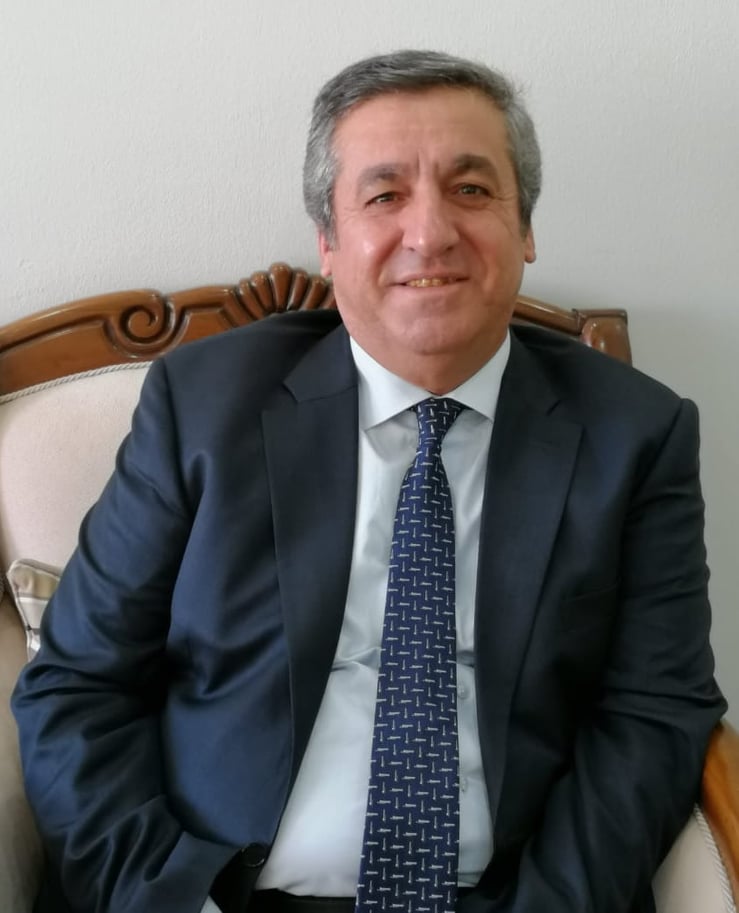
Yusuf Beğtaş
You can also send us an email to karyohliso@gmail.com


Leave a Comment